Noah's Ark
Long ago, the world had grown full of violence and wrongdoing, and people kept turning farther from what was good. God saw all of it.
But one man was different. Genesis says Noah found favor with the Lord. He was righteous in his generation, and he walked with God.
So God spoke to Noah about what was coming.
A great flood was coming, God told him, and along with the warning came careful instructions. Noah was to build an ark: a certain kind of wood, exact measurements, rooms built inside, everything covered with pitch.
His family would enter the ark with him. So would the animals.
God told Noah to bring living creatures into the ark: animals of every kind, birds, livestock, creatures that move along the ground, and to gather enough food for all of them.
Genesis sums up what happened next in one simple sentence: “Noah did this; he did all that God commanded him.”
It doesn't walk us through every day of the work. It just tells us that Noah obeyed, measurement by measurement, instruction by instruction, until the ark was finally ready.
God gave Noah a very big job: build an ark, prepare for the flood, gather food, make room for his whole family and the animals.
If it were you, what part of that would feel biggest?
Building something that big takes a long time. Genesis does not say how Noah felt about it, day after day. What it does say is that he kept building, until the work was done.
Obeying an instruction like that takes more than a moment. It takes long weeks, maybe years, of showing up and doing the next thing.
What would you want to ask Noah about all that time spent building?
Genesis keeps it simple: God spoke, and Noah obeyed.
When the time finally came, Noah entered the ark with his wife, his sons, and their wives beside him. Genesis says the animals came to Noah too, just as God had commanded, and went in with them.
And then the Lord Himself shut him in.
Noah was six hundred years old when the floodwaters came. Everything he had prepared for was about to begin.
The rain came, and it did not stop. Forty days and forty nights it fell, the waters rising higher and higher, until the ark lifted off the ground and began to float.
Genesis says the waters increased so greatly that even the high mountains were covered, and the ark floated above it all.
Inside, Noah and those with him waited it out, exactly where God had told him to build, while a flood covered the whole land outside.
For one hundred and fifty days, the waters covered the earth. Then Genesis says something important: God remembered Noah, and every animal with him in the ark.
A wind passed over the earth, the rain stopped, and slowly, little by little, the waters began to go down.
After many days, the ark came to rest on the mountains of Ararat. The water kept going down, until finally the tops of the mountains came into view.
Still, Noah did not leave. He waited. Then he opened the window he had made and sent out a bird to see what he could learn.
The first bird was a raven. Genesis says it went back and forth, back and forth, until the waters had dried from the earth.
Next Noah sent out a dove, hoping to learn whether the ground below was dry. But the dove found no place to rest its feet, so it flew back to the ark, and Noah reached out and brought it in.
Seven days later, Noah sent the dove out again. This time it came back in the evening carrying something small in its beak: a freshly plucked olive leaf. Now Noah knew the waters were going down.
But an olive leaf wasn't the end of the story, so Noah waited seven days more before sending the dove out a third time. This time, it never came back.
Think about that olive leaf for a moment. Why do you think such a small thing mattered so much in this story?
Notice how much of this part of the story is about waiting. The ark rests. The water goes down. Noah sends a bird, and then waits again.
If you were Noah, how do you think it would feel to wait that long for a sign that it was safe to leave?
The earth was drying. But Noah still didn't rush out on his own. He waited until God spoke.
Then God told him: “Come out of the ark.” Bring your wife, your sons, their wives, and every living creature with you, God said. Let them spread out across the earth.
Noah didn't decide for himself that it was time to leave. He left when God told him to leave.
So Noah came out, his wife, his sons, their wives, and all the animals, family by family, back onto dry ground after so long inside.
And the first thing Noah did was build an altar to the Lord and offer sacrifices there. The flood was over, the ark was behind him, and Noah's first response was to worship.
As Noah stood before that altar, God made him a promise: never again would He destroy all living creatures with a flood like this one.
This covenant wasn't only for Noah. Genesis says it reached forward to his descendants and to every living creature with him, a promise meant to last for generations to come.
Then God gave a sign for that covenant. “I have set my bow in the cloud,” He said, and from then on, the rainbow would be a reminder of His promise: to Noah, to his family, and to every living creature.
The story that began with judgment now ends with a promise in the sky.
Have you ever seen a rainbow after the rain? In this story, it's more than something beautiful. It's the sign of God's promise.
Think about how differently this story ends compared to how it began. It opens with a world full of violence. It closes with Noah on dry ground and God's promise in the clouds.
What do you think that change means?
How to Talk About This Story With Your Child
Noah's Ark is often remembered as a story about animals, a giant boat, and a rainbow. Those things are all part of it. But Genesis 6–9 is also a serious story about human violence, God's judgment, Noah's obedience, rescue, and covenant.
For a young child, you do not need to describe violence in graphic detail. The Bible itself gives us enough: the earth had become corrupt and filled with violence.
God judged what was happening. And God gave Noah instructions for the ark.
It is also helpful not to invent emotions for Noah. Genesis does not tell us that he was brave, frightened, tired, mocked, or confused. It tells us what he did.
Noah followed God's instructions. He entered the ark. He waited. He sent out the raven and the dove. And when God told him to leave, he came out.
That gives children plenty to notice without adding a personality the text does not give us.
The rainbow is another place where careful wording helps. Genesis does not present the rainbow only as a cheerful ending after a scary story. God calls it the sign of His covenant.
The promise is specific: never again would a flood destroy all flesh in the way this flood had.
If your child asks hard questions about why the flood happened, it is okay to answer simply: "The Bible says the earth had become corrupt and filled with violence."
You do not need to pretend every question is easy.
Pray Together
You do not have to use these exact words. You can talk to God together in your own words. Or you can pray:
God, thank You for the story of Noah. Thank You for guiding him through everything You told him to do. Thank You for Your covenant and the sign of the rainbow. Help us listen carefully to Your Word. Help us trust You even when we have to wait. And help us bring our questions to You honestly. Amen.
God gave Noah an impossible-sounding job, and Noah simply did it: he built the ark, gathered his family and the animals, and the Lord shut them in.
Then came the long wait: the rain, the rising water, and eventually the slow going-down of it, marked by a raven and a dove sent out again and again.
When God finally said it was time, Noah stepped out onto dry ground, built an altar, and watched a rainbow appear as God's promise in the sky.
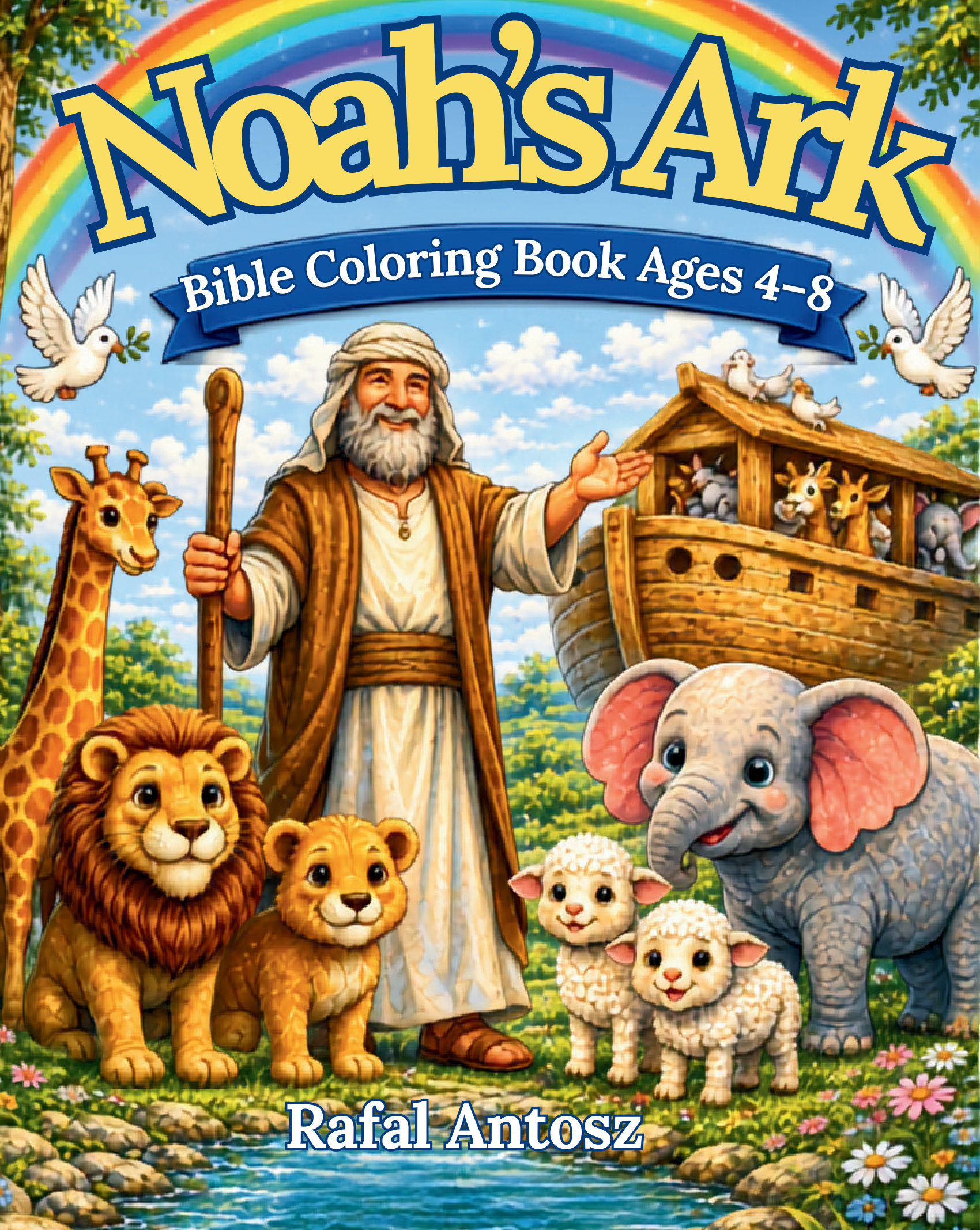
If your child enjoyed this story, the Noah's Ark Coloring Book walks through the whole story scene by scene, with a free 10-page sample you can try right now.
Looking for more? Explore free coloring pages and more Bible stories from Little Faith Hands.
Continue with the Noah's Ark Coloring Book →